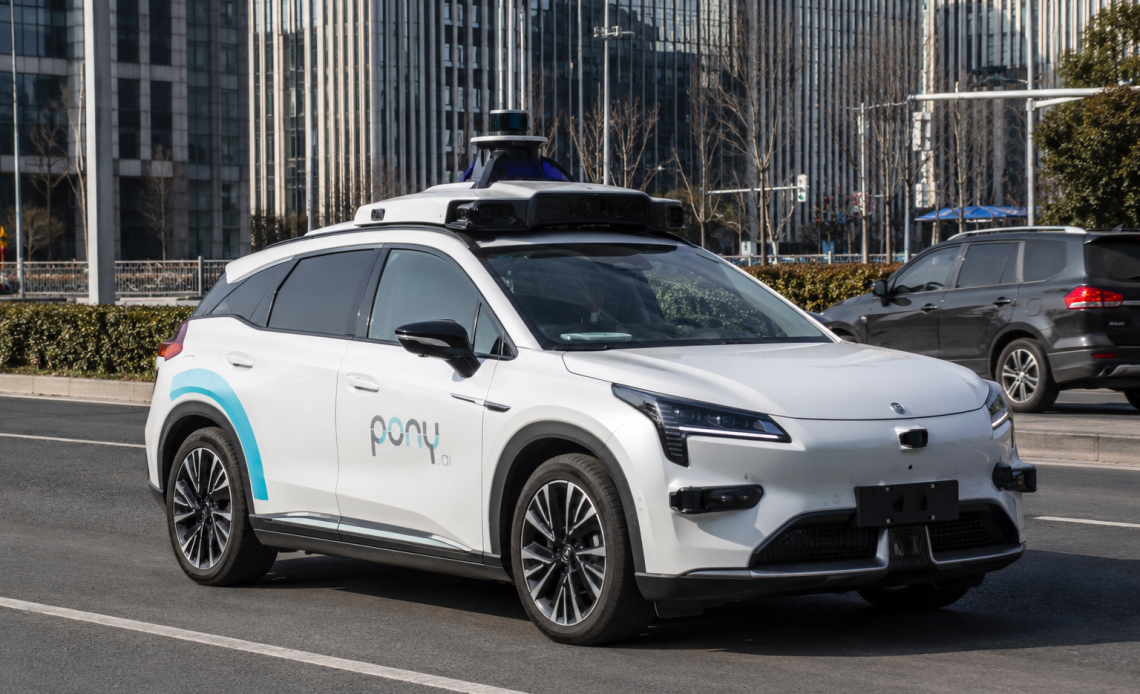
Chinese autonomous driving company Pony.ai said it has not been affected by a national safety review triggered after a robotaxi outage involving rival Baidu’s Apollo Go service, as the company continues expanding into more cities.
China paused approvals for new autonomous vehicle licenses after Apollo Go robotaxis abruptly stopped on streets in Wuhan in late March, according to a Bloomberg report.
Speaking to Reuters on Tuesday, Pony.ai co-founder and CEO James Peng said the review mainly focuses on how companies and local authorities ensure the safe operation of autonomous driving systems.
Peng said Pony.ai had already completed all required evaluations and that its business has not been impacted.
Expansion plans continue despite industry review
Peng clarified that the safety review did not involve a suspension of licenses.
He added that the Guangzhou-based company remains focused on growth and fleet expansion.
The company said it is in the process of launching into more cities while continuing to increase the number of robotaxis on the road.
In a statement, Pony.ai said it now aims to expand its robotaxi fleet to 3,500 vehicles by the end of the year, up from more than 1,700 currently operating vehicles.
The revised target marks a 16.7% increase from its earlier goal of 3,000 vehicles.
The company also raised its revenue expectations for the year.
Pony.ai said full-year robotaxi revenue is expected to exceed 3.5 times 2025 levels, compared with an earlier projection of three times growth.
Robotaxi business posts strong quarterly growth
Pony.ai reported its strongest quarterly performance yet from its core robotaxi business during the first quarter.
Revenue from robotaxi services rose nearly fivefold to $8.6 million in the first three months of the year.
Total company revenue increased 145% year-on-year to $34.3 million.
Despite the strong revenue growth, Pony.ai’s net loss widened to $53.5 million in the first quarter, compared with $37.4 million during the same period last year.
The company had reported its first profitable quarter in the fourth quarter, mainly supported by investment gains.
Overseas markets emerge as next growth battleground
Pony.ai, along with Chinese peers Baidu and WeRide, operates some of the world’s largest robotaxi fleets.
However, the companies are still in the early stages of expanding internationally.
Major cities across Europe, Asia, and the Middle East are expected to become competitive markets for autonomous driving companies seeking fleet trials, deployments, and market share.
Markets are likely to see competition between US, Chinese, and local autonomous driving players.
The UK could emerge as a major battleground in the sector.
Peng described the UK as a very interesting market and said Pony.ai is evaluating opportunities there, although he added the company was not confirming anything yet.
The post China’s self-driving safety review leaves Pony.ai unaffected appeared first on Invezz