Euro zone government bond yields rose on Monday.
This came after the United States and Iran failed to reach a deal to end the conflict.
The breakdown in talks pushed oil prices higher.
It also strengthened expectations of more interest rate hikes from the European Central Bank.
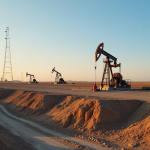
Brent crude futures climbed above $100 per barrel as the US Navy prepared measures to block ships traveling to and from Iran via the Strait of Hormuz.
The move raised concerns about potential disruptions to Iranian oil exports, fuelling upward pressure on energy prices and intensifying inflation worries across global markets.
Markets increase bets on ECB tightening
In response to rising energy costs, money markets adjusted their expectations for ECB policy.
Traders are now pricing in a deposit facility rate of 2.68% by the end of the year, suggesting two additional rate hikes and a roughly 70% probability of a third increase.
This marks a rise from around 2.60% late on Friday.
Expectations for near-term tightening have also strengthened.
Markets indicate a 45% chance of a rate increase in April, up from 25% previously.
The ECB’s deposit rate currently stands at 2%.
The shift highlights growing expectations that the ECB will maintain a hawkish stance, even as the region faces potential economic headwinds from higher energy prices.
German yields approach multi-year highs
Germany’s benchmark 10-year government bond yield rose 1.5 basis points to 3.06%, edging closer to the 3.13% level reached in late March, which marked its highest point since June 2011.
Shorter-term yields, which are more sensitive to monetary policy expectations, also climbed.
Germany’s two-year yield increased by 4 basis points to 2.62%, remaining below its late-March peak of 2.771%, the highest level since July 2024.
Analysts noted that while the weekend’s failed negotiations have heightened uncertainty, a full-scale escalation remains unlikely.
According to Reuters, Tobias Keller, investment strategist at UniCredit said, “The temporary truce briefly reduced immediate tail risks, but the failure of negotiations over the weekend has underscored that the constraints that matter most for near-term (energy) pricing remain unresolved.”
Energy shock raises concerns, but long-term risks contained
Despite the rise in oil prices, some economists believe the broader economic impact may be limited compared to past crises.
In a Reuters report, Antonio Gabriel, global economist at BofA said, “In our view, a repeat of the 1970s appears as an unlikely scenario, even if the war escalates”.
He added that the global economy has gradually become less dependent on oil over time.
Bond spreads within the euro zone widened modestly but stayed below levels seen during the peak of recent tensions.
Italy’s 10-year government bond yield rose 3.5 basis points to 3.86%, compared to a late-March high of 4.142%.
The yield spread between Italian bonds and German Bunds stood at 79 basis points.
This compares with 63 bp before the conflict began and a peak of 103.62 bp during the height of the tensions, the highest since June 20, 2025.
As mentioned in a Reuters report, Hauke Siemssen, rate strategist at Commerzbank, said, “We would probably need to see a more significant escalation for BTP-Bund spreads to test the March highs again.”
He added that Italian bonds could underperform French government bonds in the near term due to their higher sensitivity to energy prices, although the spread is expected to narrow over the longer term.
France’s bond spread stood at 64.50 basis points, up from 58 basis points before the conflict.
Fitch confirmed France’s A+ credit rating with a stable outlook on Friday, offering some support to investor confidence.
The post Traders see 70% chance of third ECB rate hike by December appeared first on Invezz