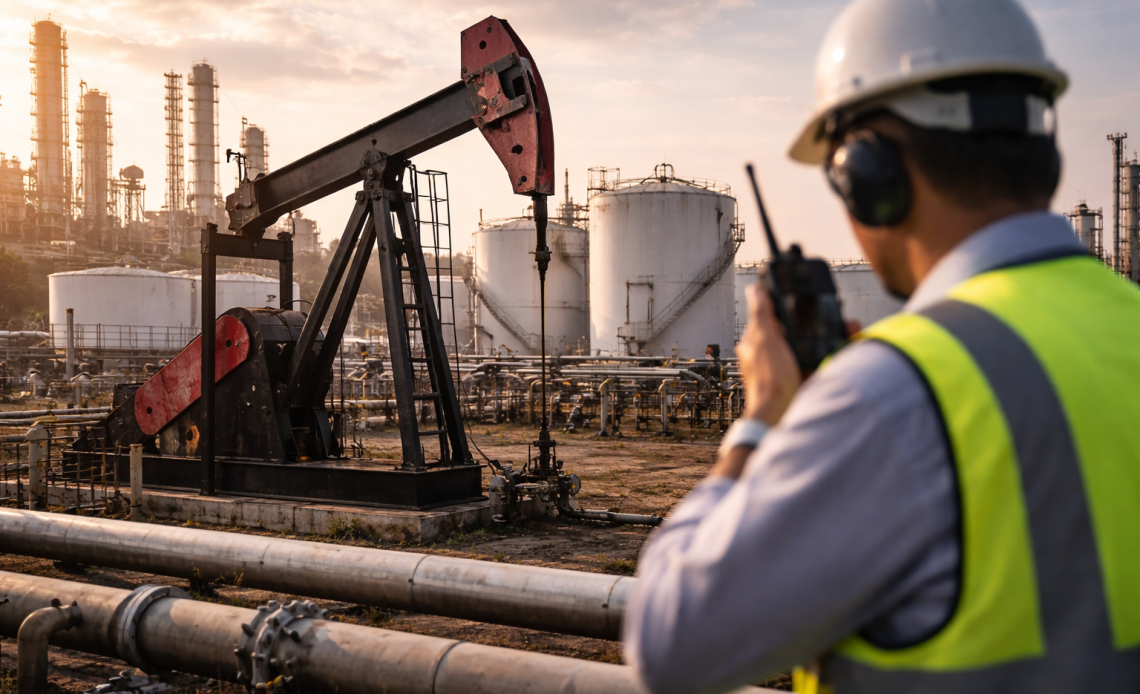
Oil prices pulled back from the highs hit earlier on Monday on reports claiming that the Group of Seven will discuss the possible release of emergency oil reserves.
Finance ministers from the G7 are scheduled to meet on Monday to discuss the potential release of emergency oil reserves.
This discussion is in response to the sharp increase in oil prices caused by the Middle East conflict.
The Financial Times was the first to report on these talks, adding that the International Energy Agency is expected to participate.
Citing sources, the FT reported that three G7 nations, including the US, have thus far indicated support for the concept.
Crude pares gains
“Oil pulled back toward $100 a barrel, paring a huge daily jump, on reports about talks of a coordinated release of reserves,” Neil Welsh, head of metals at Britannia Global Markets, said in an emailed commentary.
Oil prices spiked more than 25% on Monday, reaching their highest levels since mid-2022.
This surge was driven by major producers cutting supplies and market fears of extended shipping disruptions.
The heightened tension is attributed to the expansion of the conflict involving Iran, the US and Israel.
Brent and West Texas Intermediate (WTI) crude oil benchmarks recently surged to their highest levels since the beginning of the Russia-Ukraine war in 2022.
Brent crude oil prices saw a dramatic peak at $119.46 a barrel, marking a 26% gain, and were last trading up 12% at $103.79.
This surge also pushed Brent into triple-digit figures for the first time since August 2022.
Similarly, WTI crude oil reached a high of $119.43 per barrel and was last reported at $102.21 a barrel, reflecting a 12.5% increase.
The virtual closure of the Strait of Hormuz, a crucial transit point for roughly one-fifth of the world’s oil and liquefied natural gas, is a primary driver of rising prices.
Market drivers and supply tightening
Furthermore, the appointment of Mojtaba Khamenei to replace his father, Ali Khamenei, as Iran’s supreme leader—a move signalling the continued firm control of hardliners in Tehran a week into the conflict with the United States and Israel—is also contributing to the price increase.
US President Donald Trump has called the appointment “unacceptable”.
Even as there are calls for the release of strategic petroleum reserves, the situation in the Middle East appears to be worsening, rather than de-escalating, as evidenced by developments over the weekend.
Furthermore, upstream oil production is being shut in as producers encounter storage limitations.
Specifically, Iraq, Kuwait, and the UAE have begun scaling back their oil production.
Iraq was the first to implement supply cuts last week, reportedly reducing its output by approximately 1.5 million barrels per day (bpd).
Additionally, over the weekend, Kuwait reportedly curtailed its output by up to 300,000 bpd.
“The longer this goes on, the more supply we will see shut-in. This is a concern for markets,” Warren Patterson, head of commodities strategy at ING Group, said in a note.
“The bottom line is that, as long as we don’t see oil moving through the Strait of Hormuz, oil prices will only move higher.”
With crude oil prices trading above $100 per barrel and supplies becoming tighter, the pressure to release oil from the Strategic Petroleum Reserve (SPR) is expected to increase.
There were reports last week that the Japanese government is considering tapping its reserves, given developments in the Middle East.
The post Crude pares gains on reports of G7 SPR release appeared first on Invezz