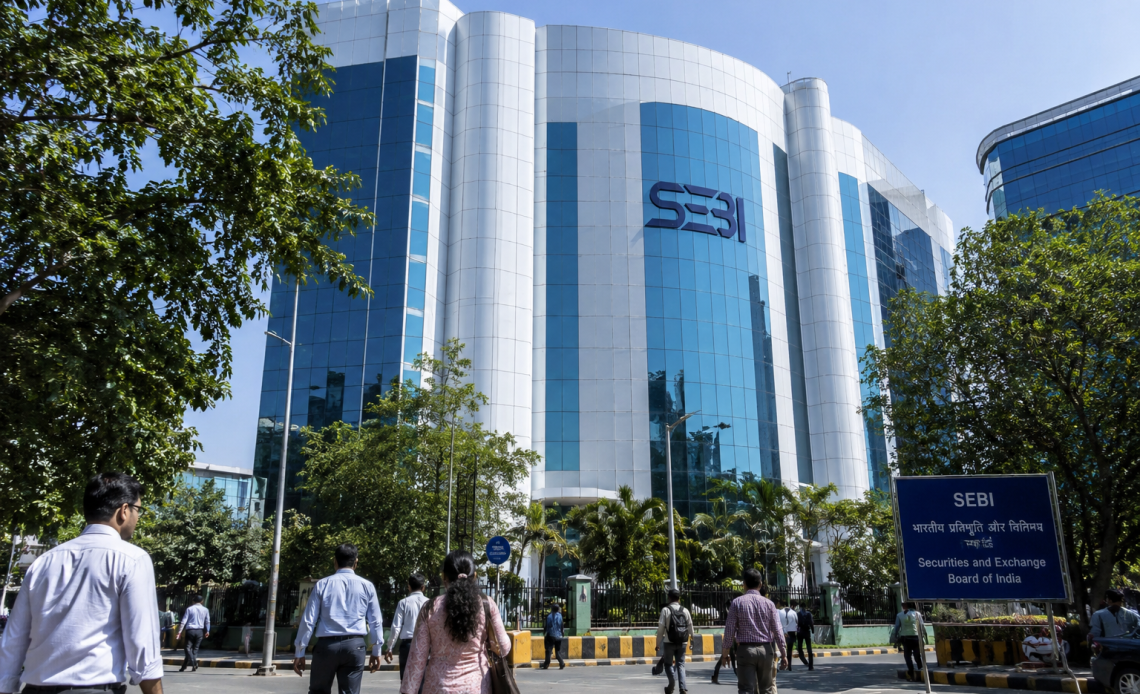
India’s markets regulator has proposed changes to how strike prices are listed and refreshed in options contracts, aiming to prevent trading gaps when prices move sharply during the day.
The Securities and Exchange Board of India, or SEBI, published a consultation paper on Monday and has sought public comments by 15 June.
The proposal is aimed at ensuring that traders have enough option contracts available above and below the current market price, particularly during periods of intraday volatility.
SEBI wants exchanges to create a more predictable framework for adding new strikes and removing contracts that are too far away from prevailing prices.
The changes would apply to options-traded derivative contracts across equity, currency and commodity markets.
Regulator targets strike-price gaps
Options contracts are built around strike prices, which determine the level at which a buyer has the right to buy or sell the underlying asset.
If the market moves sharply and exchanges do not refresh available strikes quickly enough, traders may find that suitable contracts are unavailable at critical moments.
SEBI’s proposal seeks to address that problem by requiring exchanges to ensure that enough strike prices are available on both sides of the current market price.
Under the plan, exchanges would need to formulate rules for how these strikes are listed, reviewed and refreshed. The aim is to make the process more consistent and reduce disruption when markets move quickly.
The regulator also wants exchanges to review far-off strikes on a daily basis and remove those that are no longer relevant.
That would help prevent the market from becoming cluttered with contracts that are too distant from the current price to support active trading.
Real-time additions during volatility
One of the most important parts of the proposal is the ability to add new strike prices in real time.
SEBI said exchanges should be able to introduce additional strikes during the trading day when market movements make existing contracts inadequate.
This would allow trading to continue more smoothly during sharp price swings.
The proposal reflects a practical issue in India’s fast-growing derivatives market.
Options trading has expanded rapidly, particularly among retail traders, increasing the need for systems that can keep pace with sudden intraday moves.
If implemented, the framework would give exchanges clearer obligations to respond when current strikes no longer reflect market conditions.
For traders, this could reduce the risk of being unable to find suitable contracts during volatile sessions.
For exchanges, it would require more active monitoring of strike listings and a more standardised process for updating them.
NSE and BSE approaches in focus
The proposal also comes against the backdrop of differences in how India’s two major exchanges, the National Stock Exchange of India and BSE, currently manage strike-price listings.
SEBI wants to improve predictability and align market practices more closely, according to the proposal summary.
A more uniform framework could make it easier for traders to understand when new strikes will be added and when distant strikes will be removed.
That matters because inconsistent strike availability can affect liquidity, pricing and execution.
When contracts are not available at the right levels, traders may face wider spreads or may be unable to take positions efficiently.
By requiring exchanges to maintain sufficient strikes on both sides of the market price, SEBI is trying to reduce operational friction in derivatives trading.
Daily pruning to keep listings relevant
SEBI’s proposal is not only about adding new contracts. It also focuses on removing strike prices that are too far away from the current market price.
Exchanges would need to carry out daily reviews and delete distant strikes that are no longer relevant.
This could help keep contract lists cleaner and more useful for active market participants.
The measure may also reduce unnecessary complexity in the options market.
A large number of far-off strikes can make the trading screen harder to navigate while adding little value if those contracts rarely trade.
The combination of real-time additions and daily pruning is designed to keep strike listings both flexible and relevant.
What happens next
SEBI has sought public comments on the proposal by 15 June. After reviewing the feedback, the regulator may move towards formal rules for exchanges.
The consultation process will also allow market participants to comment on how the framework should be implemented, including the operational details of when strikes should be added or removed.
If adopted, the changes would affect how exchanges manage options contracts across key derivative segments.
The proposal could be especially relevant during volatile trading sessions, when rapid price moves can leave existing strike lists out of sync with the market.
For now, the plan signals SEBI’s intent to make India’s options market more responsive, predictable and orderly.
The broader goal is clear: traders should have access to relevant contracts even when prices move sharply, while exchanges should avoid leaving outdated strikes on the system for longer than necessary.
The post Why is India’s regulator changing options strike-price rules? appeared first on Invezz