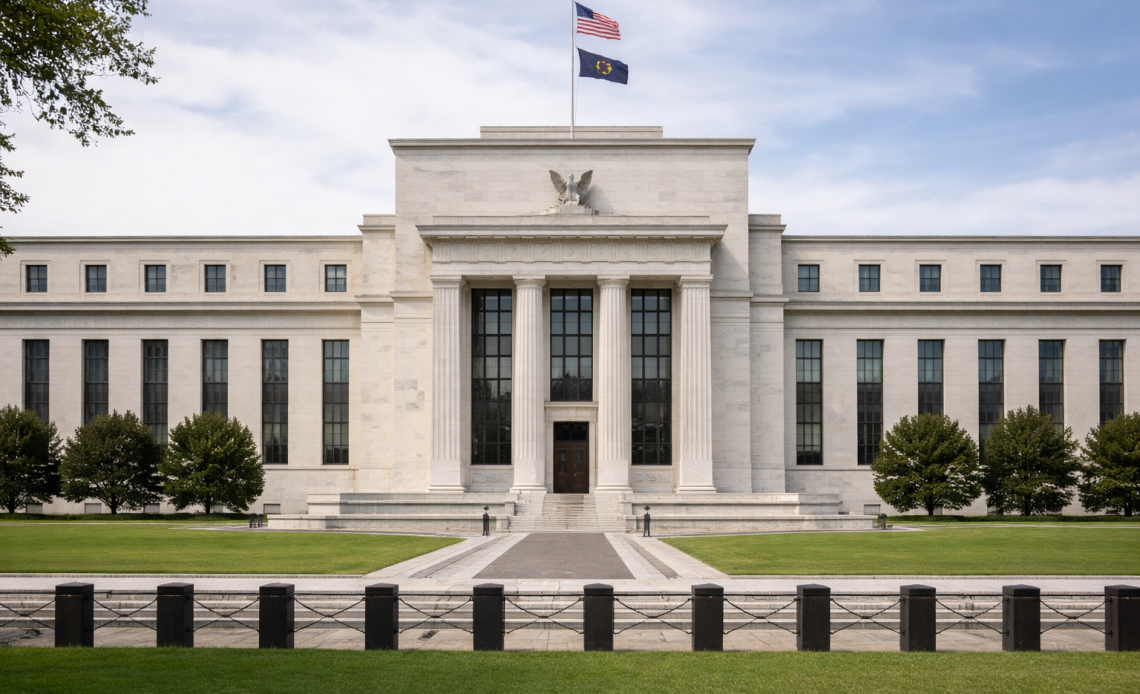
The nomination of Kevin Warsh to lead the Federal Reserve is fast becoming one of the most contentious confirmation battles in recent years, reflecting a broader clash over central bank independence, political influence and economic policy at a time of heightened global uncertainty.
As lawmakers prepare for a high-stakes hearing on April 21, a convergence of political, legal, and ethical concerns is complicating what was already expected to be a closely watched process.
Political tensions intensify ahead of hearing
Multiple points of contention have emerged in the run-up to Warsh’s confirmation hearing, setting the stage for a potentially combative session before the Senate Banking Committee.
On Thursday, all 11 Democrats on the panel called for a delay, arguing that the process should not move forward while criminal investigations involving two sitting Federal Reserve officials remain unresolved.
In a letter addressed to committee chairman Senator Tim Scott, the group said Mr. Warsh’s nomination should be paused until the inquiries into Federal Reserve Chair Jerome H. Powell and Governor Lisa D. Cook are concluded.
They also called for public hearings into President Donald Trump’s role in initiating those probes.
“Both investigations appear to be part of the Trump administration’s broader effort to take control of the Fed,” the Democrats wrote in the letter reviewed by The New York Times.
The senators added: “It would be absurd on its face to allow President Trump to handpick the next chair of the Federal Reserve as his Department of Justice actively pursues criminal investigations of not one, but two sitting members of the Federal Reserve board. It would also be inappropriate to move forward with Mr Warsh’s nomination as the president publicly threatens the federal judge who found the DoJ’s probe to lack merit.”
They further argued that proceeding under current conditions would be “unreasonable,” citing concerns that the president could be influencing legal actions tied to the central bank leadership.
Investigations into Fed officials complicate process
The backdrop to the nomination battle is an escalating legal and political dispute involving senior Federal Reserve officials.
Powell is currently facing a criminal investigation into the $2.5 billion renovation of the central bank’s headquarters in Washington, a probe he has dismissed as a “pretext” linked to policy disagreements with the administration.
The Justice Department has intensified its efforts in recent days, including an unannounced visit by prosecutors to the Fed’s construction site.
Although a federal judge recently quashed subpoenas related to the case, authorities have indicated plans to appeal.
At the same time, the administration has attempted to remove Governor Lisa Cook over alleged mortgage fraud, an accusation she has denied.
The matter has now reached the US Supreme Court, where justices have expressed skepticism about the legal basis for her dismissal.
These developments have raised broader concerns about political interference in the Federal Reserve, an institution traditionally insulated from partisan pressures.
Warsh faces scrutiny over financial disclosures
Warsh himself is also under increasing scrutiny from lawmakers, particularly over his financial disclosures.
Earlier this week, he reported assets exceeding $130 million, including more than $100 million invested in funds managed by Duquesne, the family office of Stanley Druckenmiller.
However, a portion of those holdings remains undisclosed due to confidentiality agreements, drawing criticism from Democratic lawmakers.
Senator Elizabeth Warren said: “There’s more than $100 million in assets to people or entities or outfits that are completely undisclosed and will remain undisclosed. That is not just a red flag. That is a red flag surrounded by fireworks and sparklers.”
“This is a real problem,” she added.
“No one has gone forward within the Trump administration without disclosing fully their financial holdings and who they are financially entangled with.”
The issue is expected to feature prominently during the confirmation hearing, with lawmakers likely to press Warsh on potential conflicts of interest and transparency.
Concerns over alleged past associations with Jeffrey Epstein
Further complicating the nomination are questions about Warsh’s past interactions with Jeffrey Epstein.
Emails released earlier this year indicate that Warsh and his wife, Jane Lauder, were invited to events associated with Epstein.
While it remains unclear whether Warsh attended those gatherings, Senator Warren has sought additional clarification.
“As the Senate considers your nomination to serve as Chair of the Fed, it is essential that Congress and the public fully understand the extent of any interactions or relationship you had with Jeffrey Epstein,” Warren said in a letter to Warsh.
Following a closed-door meeting with the nominee on Thursday, she reiterated her concerns, noting that although Warsh “claims to have zero knowledge of anything related to this,” the issue warrants further scrutiny.
Republican divisions add to uncertainty
Warsh’s nomination is also facing resistance within Republican ranks, underscoring the fragile political dynamics surrounding the process.
Senator Thom Tillis, a key Republican on the Banking Committee, has said he will oppose any nominee as long as the investigation into Powell remains active.
With Republicans holding only a narrow majority on the committee, Tillis’s stance could prove decisive in blocking the nomination from advancing to a full Senate vote.
Other Republican lawmakers have expressed unease about the ongoing probe, with Senate Majority Leader John Thune urging the Justice Department to conclude its investigation promptly.
“I think it’s in everybody’s best interest to wrap up the investigation,” he said.
Senator Mike Rounds echoed those concerns, saying the probe was not “serving our purpose, which is to help the president get the next Federal Reserve chairman he wants”.
Powell’s intent to stay on also faces protest from Trump
The timing of the confirmation process is adding another layer of complexity.
Powell’s term as chair is set to end on May 15, raising the possibility of a leadership vacuum if Warsh is not confirmed in time.
Powell has indicated that he would remain in the role on a temporary basis if necessary, citing legal precedent and the Fed’s internal governance framework.
However, there are concerns that the administration could challenge this arrangement and attempt to appoint an alternative leader.
President Trump has also escalated tensions by suggesting he could remove Powell if he does not step aside voluntarily.
“Then I’ll have to fire him,” Trump told Fox Business, when asked about Powell’s plans to stay on in the job.
“I’ve held back firing him. I’ve wanted to fire him, but I hate to be controversial,” Trump said.
Legal experts note that the Federal Reserve board has the authority to delegate leadership responsibilities in the event of a vacancy, and recent court rulings have reinforced the requirement for Senate approval in appointing a new chair.
The post Warsh’s nomination scrutiny sets stage for heated confirmation hearing appeared first on Invezz